
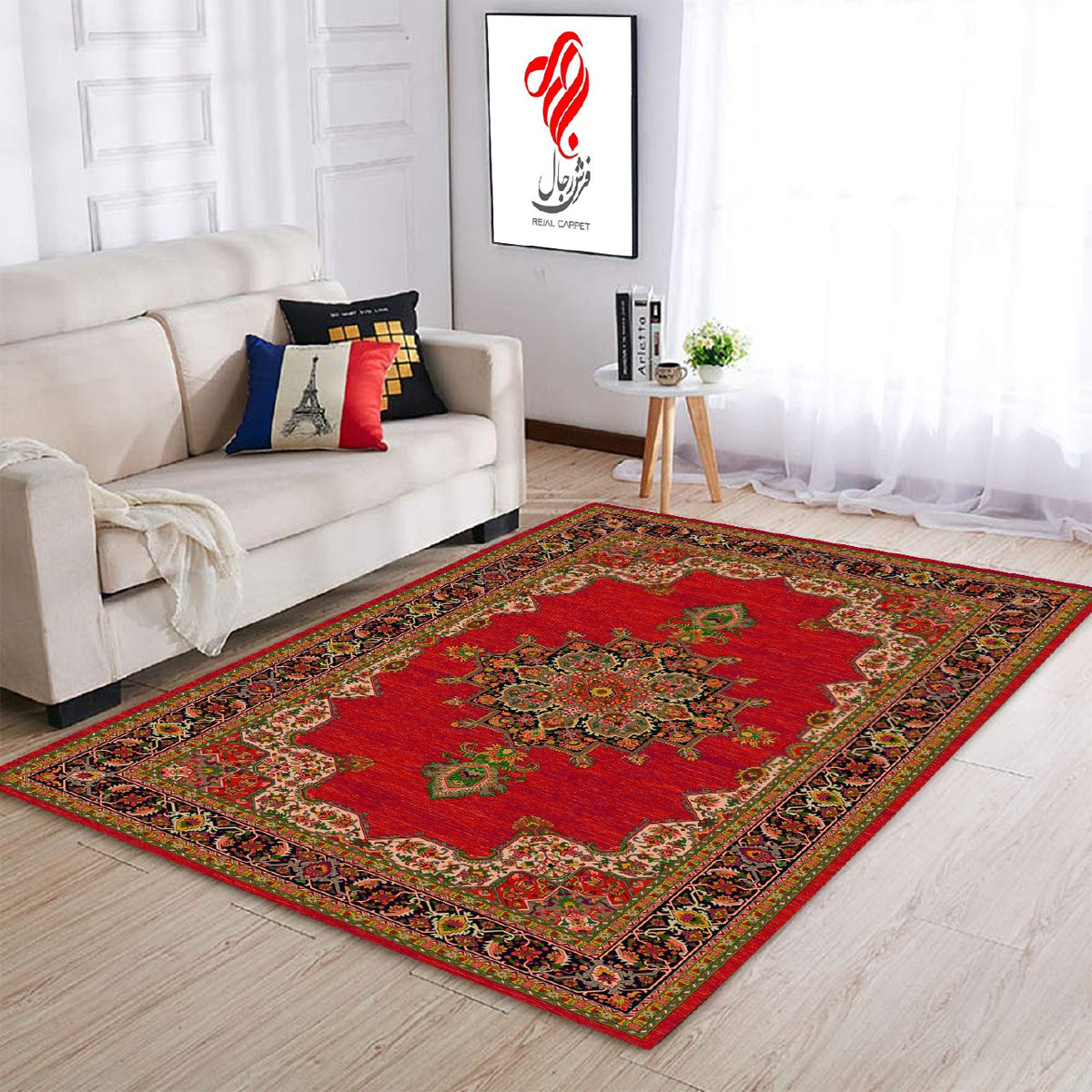
Buying the wrong rug size is one of the most common — and most fixable — decorating mistakes. A rug that is too small makes a room feel disjointed; one that is too large can overwhelm the space. This guide walks you through the practical rules for every major room so you can measure once and shop with confidence.
Step 1: Measure Your Room First
Before you shop, grab a tape measure and note the following:
- Room length and width — measure wall to wall in both directions.
- Clear floor space — subtract any built-in furniture, fireplace hearths, or architectural features that can't move.
- Desired border — for most rooms, leaving 45–60 cm (18–24 in) of bare floor around the rug's perimeter looks intentional and balanced.
Write measurements in both metric and imperial if you'll be comparing sizes online. Standard rug sizes straddle both systems, so having both handy avoids confusion at checkout.
Dining Room: Chair Clearance Is Everything
The most-asked question we hear: How far should the rug extend beyond the dining table? The answer is driven by chair movement.
When a chair is pulled out for someone to sit down, it typically travels 45–60 cm (18–24 in) from the table edge. Your rug must extend at least that far beyond every side of the table — ideally all four — so chair legs land on the rug even when pushed back. This prevents the frustrating scrape and lurch of chair legs catching the rug edge.
Practical size formulas
- Table + 90 cm (36 in) on each side → minimum safe extension. Example: a 90 × 180 cm (3 × 6 ft) table needs at minimum a 270 × 360 cm (9 × 12 ft) rug.
- Table + 60 cm (24 in) on each side → workable minimum if the room is tight, but chair legs may catch the edge occasionally.
Common dining-room rug sizes (metric / imperial)
- 200 × 290 cm / 6½ × 9½ ft — suits a table seating 4–6
- 240 × 330 cm / 8 × 11 ft — suits a table seating 6–8
- 270 × 365 cm / 9 × 12 ft — suits a table seating 8–10
A round table pairs well with a round rug or a square rug rotated 45°. Keep the same clearance rule: at least 45 cm beyond the table edge on all sides.
Browse our Persian machine-made rugs to find traditional patterns that layer beautifully under a dining table. The QASHQAI 274 and Persian Qashqai Red (Code 280) are popular choices for dining spaces thanks to their rich, forgiving patterns.
Living Room: Sofa Placement Rules
There are three widely used sofa-placement approaches, and each creates a different feel. Choose based on room size and how formal you want the space to look.
Option 1 — All legs on the rug
Every piece of seating furniture sits fully on the rug. This is the most cohesive look and works best in large rooms with a rug of at least 270 × 365 cm (9 × 12 ft). The rug anchors the entire seating group as a unified zone.
Option 2 — Front legs on the rug (most common)
The two front legs of each sofa and chair rest on the rug while the back legs sit on the bare floor. This connects the furniture to the rug visually without requiring as large a rug. A 200 × 290 cm (6½ × 9½ ft) or 240 × 330 cm (8 × 11 ft) rug typically works well here.
Option 3 — All legs off the rug
The rug sits in the centre of the seating arrangement as a floating accent. This only works if the rug is clearly intentional in size — too small and it looks like an afterthought. Leave at least 20–30 cm (8–12 in) between the rug edge and the nearest furniture leg.
Living-room sizing reference
- Small sitting room (under 3 × 3.5 m): 160 × 230 cm / 5 × 7½ ft
- Medium living room (3 × 4.5 m): 200 × 290 cm / 6½ × 9½ ft or 240 × 330 cm / 8 × 11 ft
- Large open-plan room: 270 × 365 cm / 9 × 12 ft or larger
The Qashqai Vintage 700 Reed (Code 227) and Qashqai Red Area Rug (Code 267) work particularly well in living rooms where you want a traditional centrepiece that ties the whole seating arrangement together. If you prefer a cream-toned neutral, the QASHQAI 253 Cream Rug complements a wide range of upholstery colours.
Hallways & Runners: Width and Length
Runners define and protect high-traffic corridors. Two measurements matter most:
- Width: leave 10–15 cm (4–6 in) of bare floor on each side of the runner. A hallway that is 90 cm (36 in) wide suits a 60 cm (24 in) wide runner; a 120 cm (48 in) hallway suits a 90 cm (36 in) runner.
- Length: stop the runner 15–20 cm (6–8 in) short of each end wall so the floor has a visible border — this makes the corridor look longer and cleaner.
Standard runner lengths in Canada range from 75 cm (2½ ft) to 300 cm (10 ft). For extra-long hallways, two runners placed end-to-end with a small gap look intentional and are easier to handle than a custom-cut piece.
For stair runners, measure each tread and riser individually and add 10–15% extra for wrapping and any pattern repeat.
Metric vs Imperial: A Quick Conversion Cheat Sheet
Canadian retailers often list rugs in both systems. Here are the most common standard sizes side by side:
| Imperial | Approximate Metric | Best use |
|---|---|---|
| 2 × 3 ft | 60 × 90 cm | Entry mat / small accent |
| 4 × 6 ft | 120 × 180 cm | Small bedroom / reading nook |
| 5 × 8 ft | 150 × 240 cm | Small living room / bedroom |
| 6½ × 9½ ft | 200 × 290 cm | Medium living or dining room |
| 8 × 10 ft | 240 × 305 cm | Medium-large living room |
| 8 × 11 ft | 240 × 330 cm | Dining room seating 6–8 |
| 9 × 12 ft | 270 × 365 cm | Large living or dining room |
| 10 × 14 ft | 305 × 425 cm | Grand open-plan spaces |
Tip: When in doubt, go one size up. A slightly larger rug almost always looks better than one that is too small.
Bedroom Sizing
In a bedroom the rug anchors the bed. Aim to have at least 45–60 cm (18–24 in) of rug extending on both sides and the foot of the bed so bare feet land on softness in the morning. For a queen bed, a 240 × 330 cm (8 × 11 ft) rug is a reliable choice. For a king, step up to 270 × 365 cm (9 × 12 ft) or larger.
Alternatively, two matching runners placed on either side of the bed — each roughly 60 × 180 cm (2 × 6 ft) — give a clean symmetrical look without the cost of a single large rug.
Quick Sizing Checklist
- ☐ Measured room length and width
- ☐ Noted 45–60 cm border allowance for perimeter
- ☐ For dining: confirmed rug extends 45–60 cm beyond table on all sides (90 cm preferred)
- ☐ For living room: decided on all-legs-on, front-legs-on, or floating approach
- ☐ For runner: checked hallway width and subtracted 20–30 cm for floor border
- ☐ Compared measurements to standard sizes using both metric and imperial
Shop Persian Machine-Made Rugs in Canada
Ready to find the right size? Browse the full Persian machine-made Rugs Canada collection and filter by size to match your measurements. Here are a few in-stock options to start with:
- QASHQAI 700 Reed Traditional Persian Rug (Code 234) — a classic all-room choice
- Qashqai Traditional Red Floral Medallion (Code 260) — bold centrepiece for dining and living rooms
- QASHQAI 700 Reed Classic Area Rug (Code 261) — versatile everyday option
- QASHQAI 253 Cream Rug — light, neutral tone that pairs with almost any décor
Still unsure? Use the checklist above, take a photo of your room with a tape measure visible, and contact us — we're happy to help you find the right fit.

Leave a comment
All comments are moderated before being published.
This site is protected by hCaptcha and the hCaptcha Privacy Policy and Terms of Service apply.